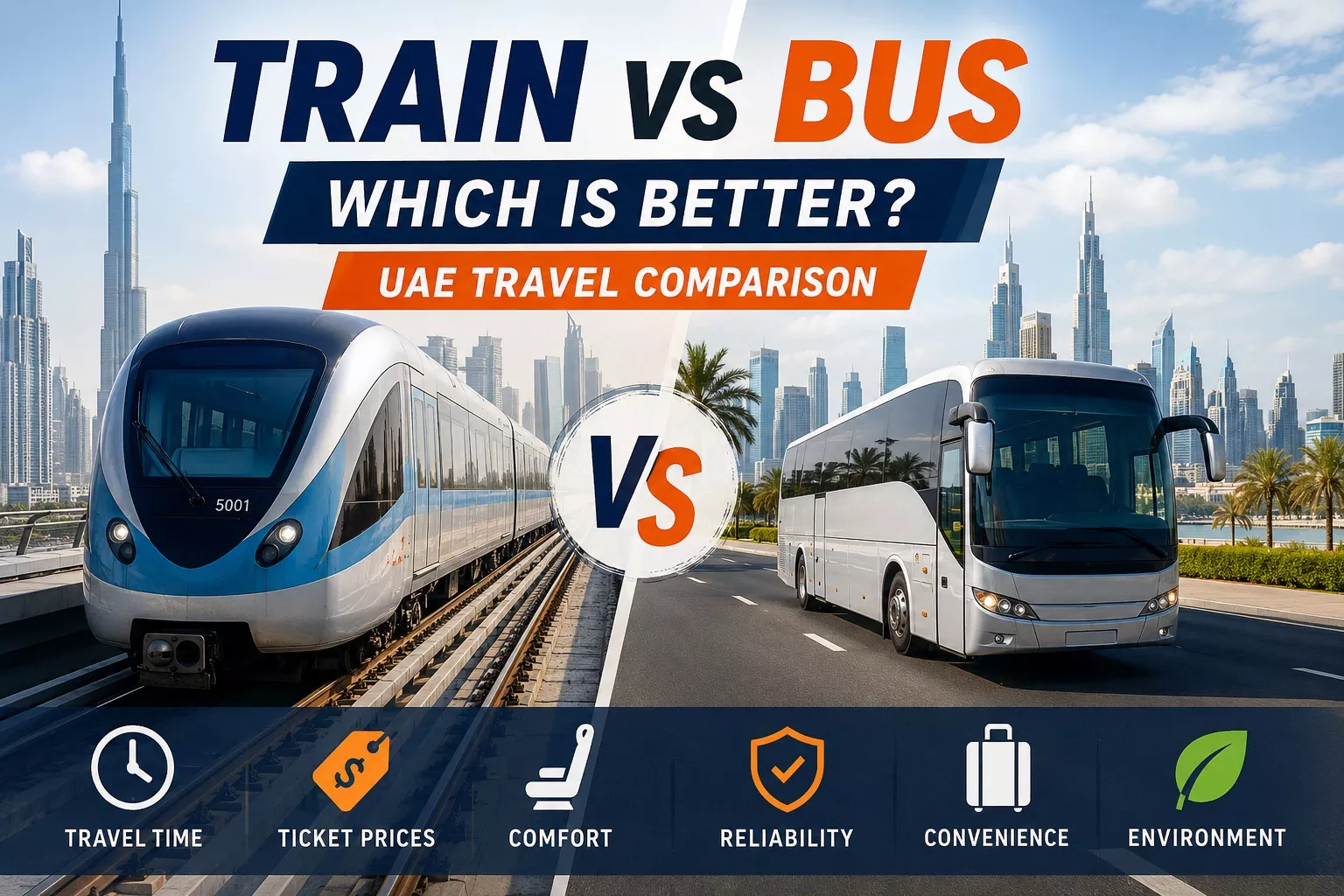
Choosing between a train and a bus depends on your priorities. Some travelers want the fastest journey, while others focus on price, comfort, or convenience. As the UAE continues to expand its public transportation network, understanding the advantages of each option becomes increasingly important.
Both trains and buses offer reliable ways to travel between cities. However, each mode of transport has unique strengths that make it more suitable for certain types of journeys.
Train vs Bus at a Glance
| Feature | Train | Bus |
|---|---|---|
| Travel Time | Usually faster on major routes | Can be affected by road traffic |
| Ticket Price | Moderate | Usually the cheapest option |
| Comfort | High | Good |
| Reliability | Excellent | Depends on traffic conditions |
| Luggage Space | Generous | Available on intercity buses |
| Accessibility | Excellent | Good |
| Environmental Impact | Lower emissions | Higher emissions per passenger |
Travel Time
Is the Train Faster Than the Bus?
In most situations, trains offer shorter travel times because they operate on dedicated railway tracks that are not affected by road congestion. Even during peak hours, trains typically maintain their schedules.
Buses, on the other hand, share roads with other vehicles. Heavy traffic, accidents, or road works may increase travel time, especially around large cities.
For commuters who value predictable arrival times, trains are generally the better choice.
Ticket Prices
Which Option Costs Less?
Bus travel is often the most affordable way to travel between cities. Low ticket prices make buses especially attractive for students, budget travelers, and daily commuters.
Train tickets may cost slightly more, but many passengers consider the additional comfort, shorter journey, and greater reliability worth the extra expense.
If available, travel cards, seasonal passes, and promotional fares can reduce the cost of both train and bus journeys.
Comfort During the Journey
Train Comfort
Modern trains are designed to provide a comfortable travel experience. Passengers usually enjoy spacious seating, wider aisles, smooth rides, and the freedom to walk around during longer trips.
Many trains also provide power outlets, luggage racks, onboard information displays, and climate-controlled cabins.
Bus Comfort
Intercity buses have improved significantly in recent years. Most coaches offer air conditioning, reclining seats, overhead storage, and comfortable interiors.
However, buses may experience more vibration and frequent stops compared to trains.
Reliability
One of the biggest advantages of rail travel is schedule reliability. Since trains do not operate on public roads, they are largely unaffected by traffic congestion.
Bus schedules can vary depending on road conditions. Although transport operators work hard to maintain punctuality, unexpected delays are more common on highways than on rail networks.
Onboard Amenities
Depending on the operator and route, passengers may find a variety of onboard facilities.
- Comfortable seating
- Air conditioning
- Charging ports
- Wi-Fi on selected services
- Luggage storage
- Accessible spaces for passengers with reduced mobility
Premium train services often provide more onboard amenities than standard bus routes.
Accessibility
Both trains and buses are becoming increasingly accessible for all passengers.
Modern stations and terminals often include elevators, ramps, tactile paving, accessible ticket machines, and dedicated boarding areas.
Families traveling with children, elderly passengers, and wheelchair users generally find train travel especially convenient due to level boarding and spacious interiors.
Environmental Impact
Rail transport is widely recognized as one of the most environmentally friendly forms of public transportation.
Because trains can carry hundreds of passengers at once while producing relatively low emissions per traveler, they help reduce traffic congestion and support sustainable mobility.
Buses are also considerably more environmentally friendly than private cars, especially when operating at high occupancy.
Safety Comparison
Both trains and buses maintain high safety standards.
Railways benefit from dedicated infrastructure, advanced signaling systems, and controlled operating environments. Bus operators maintain strict safety procedures and professional driver training, but road travel is naturally exposed to external factors such as traffic and weather conditions.
Which Option Is Best for Different Travelers?
Tourists
Trains are an excellent choice for visitors who want a comfortable and stress-free journey between major destinations.
Daily Commuters
Passengers traveling every day often prefer trains because of consistent travel times and reduced delays.
Families
Families with children usually appreciate the additional space available on trains, especially during longer journeys.
Business Travelers
Reliable schedules make trains ideal for passengers who need to arrive on time for meetings or flights.
Budget Travelers
Buses remain the preferred option for travelers looking to minimize transportation expenses.
Popular UAE Routes Compared
Dubai – Abu Dhabi
As passenger rail services expand in the UAE, trains are expected to become one of the fastest and most convenient ways to travel between Dubai and Abu Dhabi. Buses currently provide a reliable and economical alternative with multiple departures throughout the day.
Dubai – Sharjah
Buses are widely used on this route today, although travel times can increase significantly during rush hour. Future rail connections are expected to improve journey reliability.
Abu Dhabi – Al Ain
Intercity buses currently serve this corridor. Planned rail expansion could provide faster travel in the future.
Pros and Cons
Advantages of Train Travel
- Fast travel times
- Reliable schedules
- Comfortable seating
- Smooth ride
- Lower environmental impact
- Excellent accessibility
Disadvantages of Train Travel
- Limited station coverage
- Fixed routes
- May cost more than buses
Advantages of Bus Travel
- Affordable fares
- Extensive route network
- Frequent departures
- Access to destinations without rail service
Disadvantages of Bus Travel
- Traffic delays
- Longer travel times during peak periods
- Less space to move around
Frequently Asked Questions
Is the train cheaper than the bus?
In most cases, buses offer lower ticket prices, while trains provide greater comfort and faster travel.
Which is faster?
Trains are generally faster because they are not affected by road traffic.
Which is better for tourists?
For travel between major cities, trains usually provide the most comfortable experience. Buses remain an excellent option where rail service is unavailable.
Can I bring luggage?
Yes. Both trains and intercity buses typically allow passengers to travel with luggage, although policies may differ depending on the operator.
Which option is more environmentally friendly?
Rail travel generally produces lower emissions per passenger, making trains one of the most sustainable transportation choices.
Final Verdict
There is no single answer to whether a train or a bus is better—it depends on your travel priorities.
If you value speed, reliability, comfort, and sustainability, trains are usually the preferred option. If your main goal is saving money or reaching destinations without rail service, buses remain an excellent choice.
As the UAE continues to develop its railway network, travelers will enjoy even more opportunities to choose fast, comfortable, and efficient public transportation across the country.