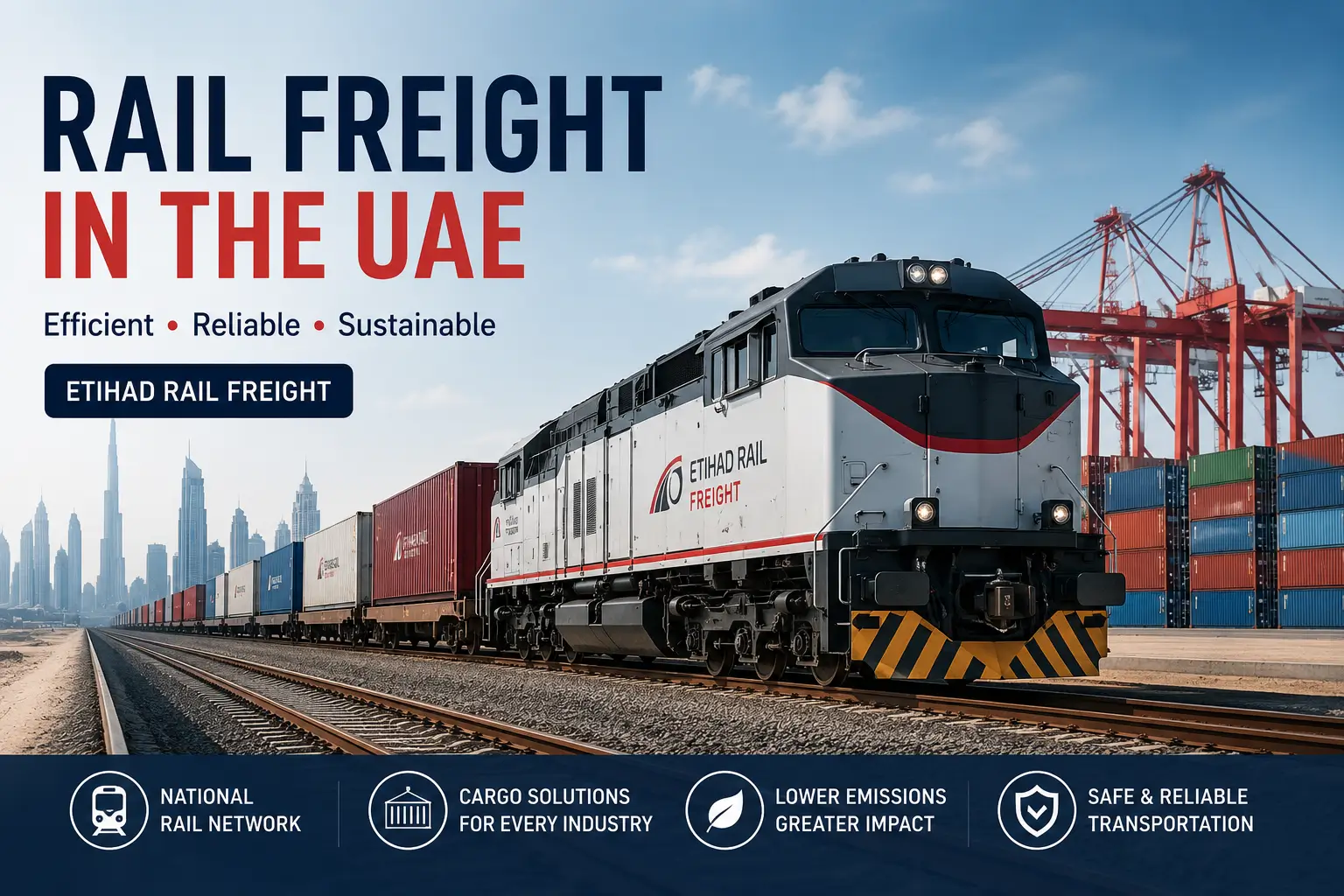
The UAE has become one of the Middle East’s leading logistics hubs, and rail freight is playing an increasingly important role in cargo transportation. The country’s national railway network, operated by Etihad Rail Freight, enables businesses to move goods efficiently between ports, industrial zones, logistics hubs, and manufacturing facilities across the Emirates.
Rail transportation offers a reliable and sustainable alternative to long-distance trucking, helping reduce road congestion, lower carbon emissions, and improve supply chain efficiency. As the UAE continues investing in railway infrastructure, freight services are expected to play an even greater role in regional trade.
What Is Rail Freight?
Rail freight refers to the transportation of goods using freight trains instead of trucks or air cargo. Modern freight railways are designed to move large volumes of cargo safely and efficiently over long distances while reducing transportation costs.
Rail freight is commonly used for transporting:
- Shipping containers
- Construction materials
- Industrial equipment
- Steel and metals
- Cement
- Chemicals
- Food products
- Consumer goods
- Bulk commodities
Etihad Rail Freight Network
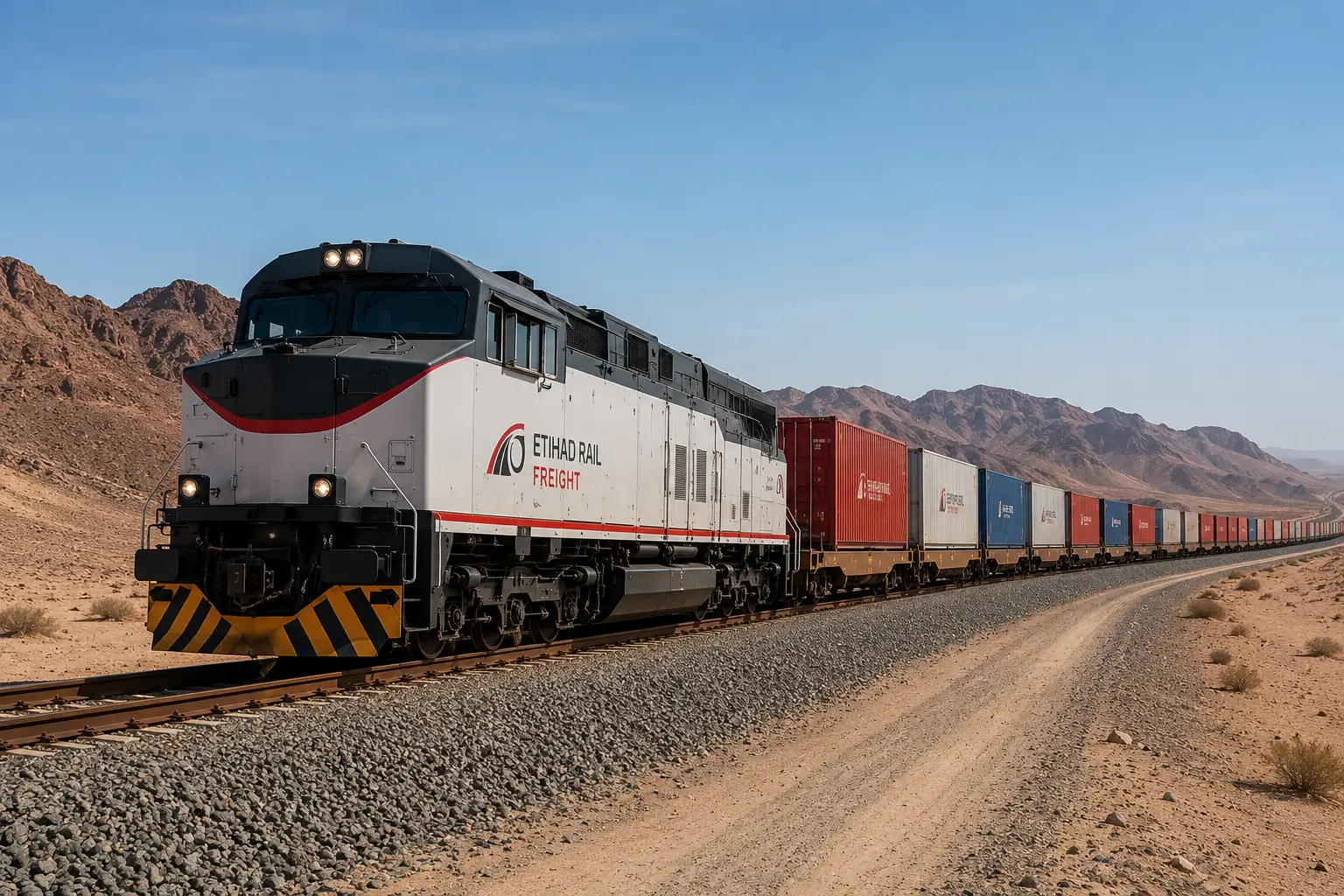
Etihad Rail Freight is the UAE’s national cargo railway network. It connects major logistics centers, industrial facilities, ports, and free zones across the country, creating a modern transportation corridor that supports the nation’s growing economy.
The freight railway connects key locations including:
- Abu Dhabi
- Dubai
- Sharjah
- Fujairah
- Ras Al Khaimah
- Major industrial zones
- Container terminals
- Logistics parks
- Manufacturing facilities
The railway is also designed to become part of the future GCC Railway network, providing international rail cargo connections between the UAE and neighboring Gulf countries.
Advantages of Rail Freight Transportation
Businesses increasingly choose train cargo transportation because of its operational and environmental advantages.
- Lower transportation costs for heavy cargo
- Reliable delivery schedules
- Reduced highway congestion
- Lower carbon emissions
- High cargo capacity
- Improved supply chain efficiency
- Safe transportation of bulk materials
- Reduced fuel consumption
For high-volume shipments, rail freight often provides a more economical solution than long-distance road transport.
Types of Cargo Transported by Train
Modern freight trains operating within the UAE transport a wide variety of commercial goods, including:
- Standard shipping containers
- Refrigerated containers
- Construction materials
- Industrial machinery
- Steel products
- Cement and aggregates
- Oil and gas equipment
- Agricultural products
- Consumer goods
- Bulk commodities
Rail Logistics in the UAE
Rail logistics forms an important part of the UAE’s integrated transportation network. Freight trains work alongside ports, airports, warehouses, and trucking companies to create efficient multimodal supply chains.
Intermodal rail transportation allows containers to move quickly from seaports to inland logistics centers before final delivery by road. This reduces handling costs while improving delivery efficiency.
Rail Freight vs Road Transport
| Rail Freight | Road Transport |
|---|---|
| Ideal for bulk cargo | Ideal for local deliveries |
| Lower cost for long distances | Door-to-door flexibility |
| Large shipment capacity | Suitable for smaller loads |
| Lower emissions | Faster for short-distance transport |
| Reliable schedules | Greater route flexibility |
Rail Freight Rates
The cost of rail freight transportation depends on several factors, including:
- Shipment weight
- Cargo volume
- Container type
- Transportation distance
- Loading requirements
- Destination
- Type of goods
For large industrial shipments, rail freight is often more cost-effective than road transport while offering greater capacity and improved operational efficiency.
The Future of Freight Rail in the UAE
The UAE continues investing in railway infrastructure to strengthen its position as a global logistics hub. The expansion of Etihad Rail Freight will increase cargo capacity, improve connections between ports and industrial zones, and support future cross-border transportation through the GCC Railway network.
As freight rail services continue to grow, businesses across the Emirates will benefit from faster, more sustainable, and more efficient cargo transportation.
Frequently Asked Questions
What is Etihad Rail Freight?
Etihad Rail Freight is the UAE’s national railway cargo network that transports commercial goods between ports, industrial areas, logistics centers, and manufacturing facilities across the country.
What goods can be transported by rail?
Freight trains transport shipping containers, construction materials, industrial products, machinery, steel, cement, chemicals, consumer goods, and other commercial cargo.
Is rail freight cheaper than road transport?
For long-distance and high-volume shipments, rail freight is often more economical than trucking while providing reliable delivery schedules and greater cargo capacity.
Does the UAE railway connect with other GCC countries?
The UAE railway has been designed to integrate with the future GCC Railway network, which will support cross-border cargo transportation throughout the Gulf region.
Why is rail freight important?
Rail freight improves logistics efficiency, reduces transportation costs for bulk cargo, lowers emissions, decreases road congestion, and supports sustainable economic growth.